A universal composite can cover anterior and posterior restorations, but composites don't all handle, polish or cure the same way. Shade range, consistency, polish and curing requirements all affect how well a material works in everyday practice.
Silmet makes two composites for this: ProFil, a universal microhybrid for anterior and posterior restorations, and ProFil Posterior, designed for posterior work. The sections below cover their features, shades and technical data to help you decide which one suits your procedures.
A universal composite is meant to cover several indications, which can simplify material selection and stock for practices that do a mix of restorations. But "universal" doesn't mean one material suits every case. A small anterior restoration and a large posterior cavity call for different handling, shades and technique.
Before you choose, check:
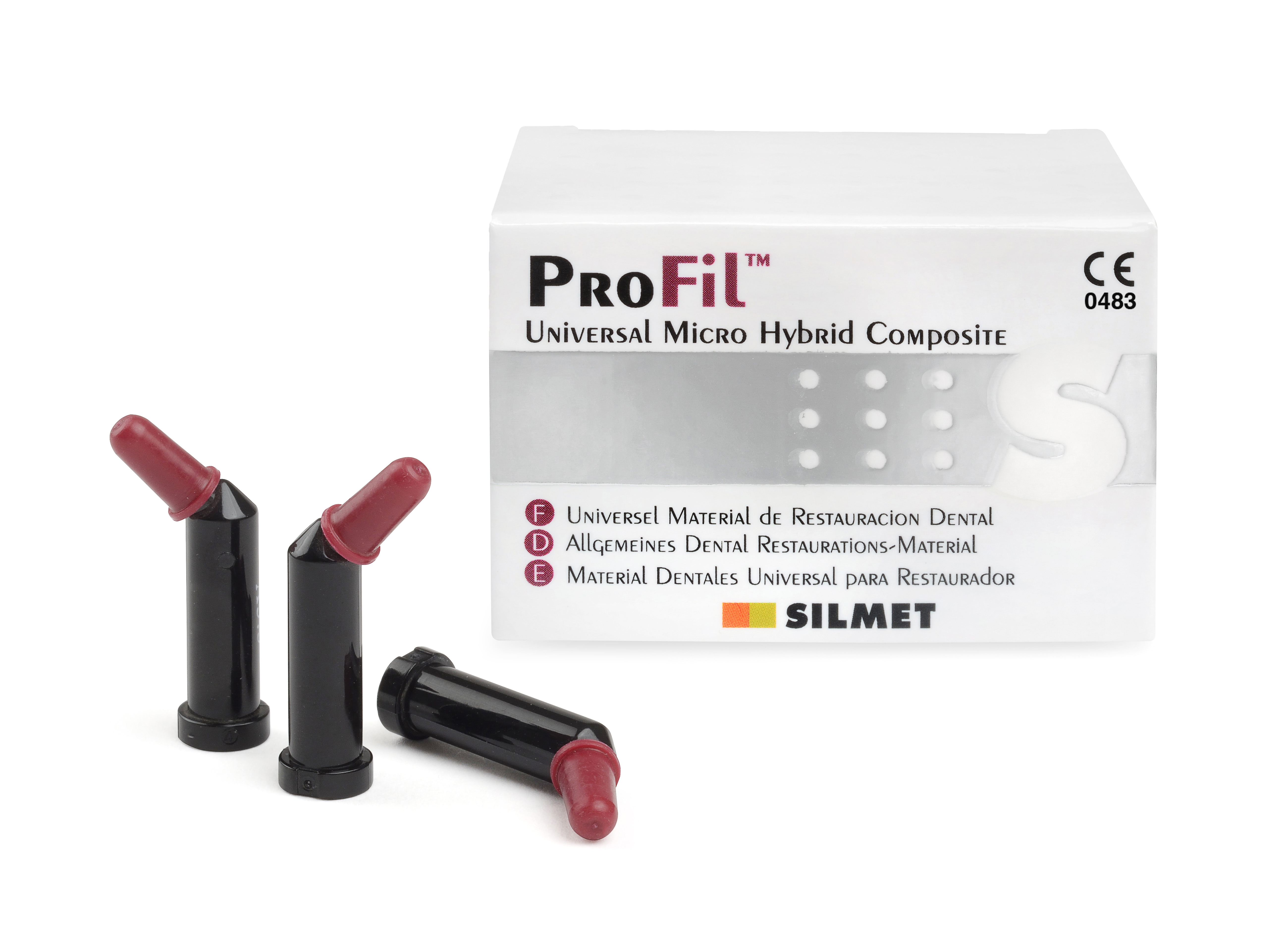
ProFil is a microhybrid composite resin designed for anterior and posterior restorations, giving dentists one material option to evaluate for both types of clinical work. Read our product page and the instructions for use for its indications, application steps and specifications.
Filler class alone doesn't tell you how a composite will perform. Microhybrids and nanohybrids use different filler technology, but that doesn't tell you which product keeps its polish or resists wear better. The resin formulation, your polishing system and finishing technique, and the forces on the restoration all play a part.
Keep three properties separate:
A composite that polishes well on the day may not hold its gloss. And a wear-resistance claim means little without the test behind it, so ask for the method and conditions before comparing products.
Silmet lists high polishability, polish retention and wear resistance for ProFil. Weigh those against how it handles and what it's indicated for. Silmet also offers a ProFil Finishing Kit for the finishing stage.
Shade matters most in visible areas. The available shades and opacities, together with your technique, decide how closely a restoration blends with the surrounding teeth.
Anterior work usually needs close attention to neighboring teeth, discoloration and the result the patient wants. In posterior restorations shade still counts, but handling and occlusal anatomy often come first.
When you review a shade range, think about:
ProFil syringes come in 14 shades, including A1, A2, A3, A3.5, A4, B1, B2, B3, C2, C3, D3 and opaque shades OA2 and OA3. Capsules come in 12 shades: A1, A2, A3, A3.5, A4, B1, B2, B3, C2, C3, OA2 and BW (bleach white). Which one you pick depends on the tooth and the result you want.
Posterior restorations are often harder to handle than anterior ones. Establishing proximal contacts, shaping occlusal anatomy and finishing margins can be demanding, especially in large cavities or where access is limited.
A universal composite can work well in many posterior cases when its indications and handling suit the restoration. Some clinicians prefer a dedicated posterior material with a packable consistency, because it makes contacts and occlusal anatomy easier to shape.
ProFil Posterior is a visible-light activated, radiopaque composite for direct or indirect posterior restorations. Its resin system combines Bis-GMA, TEGDMA and UDMA. Silmet lists wear resistance, strength, packability, marginal adaptation and interproximal contact among its features. It comes in six shades (A1, A2, A3, A3.5, B2 and C2) in 4 g syringes.
Those are the manufacturer's descriptions of the material. Whether it outperforms a universal composite in wear or longevity would take equivalent tests and clinical evidence.
Polymerization shrinkage is worth a look too, but a single shrinkage figure won't predict how a restoration turns out. Bonding, cavity configuration, placement technique and curing conditions all matter. For Class II cases, including the sandwich technique with a glass ionomer, see our guide to Class II fillings.
The format you choose affects dispensing, stock and waste. The better fit depends on how often you use each shade and how much composite a typical restoration takes.
Syringes let you dispense what the case needs. They suit practices that use certain shades regularly, as long as you handle the material and tips as the manufacturer instructs.
Single-use capsules hold a premeasured amount for one application. They suit practices that prefer portioned dispensing, though the quantity may not match every restoration, and you'll need a compatible applicator.
Before choosing, consider:
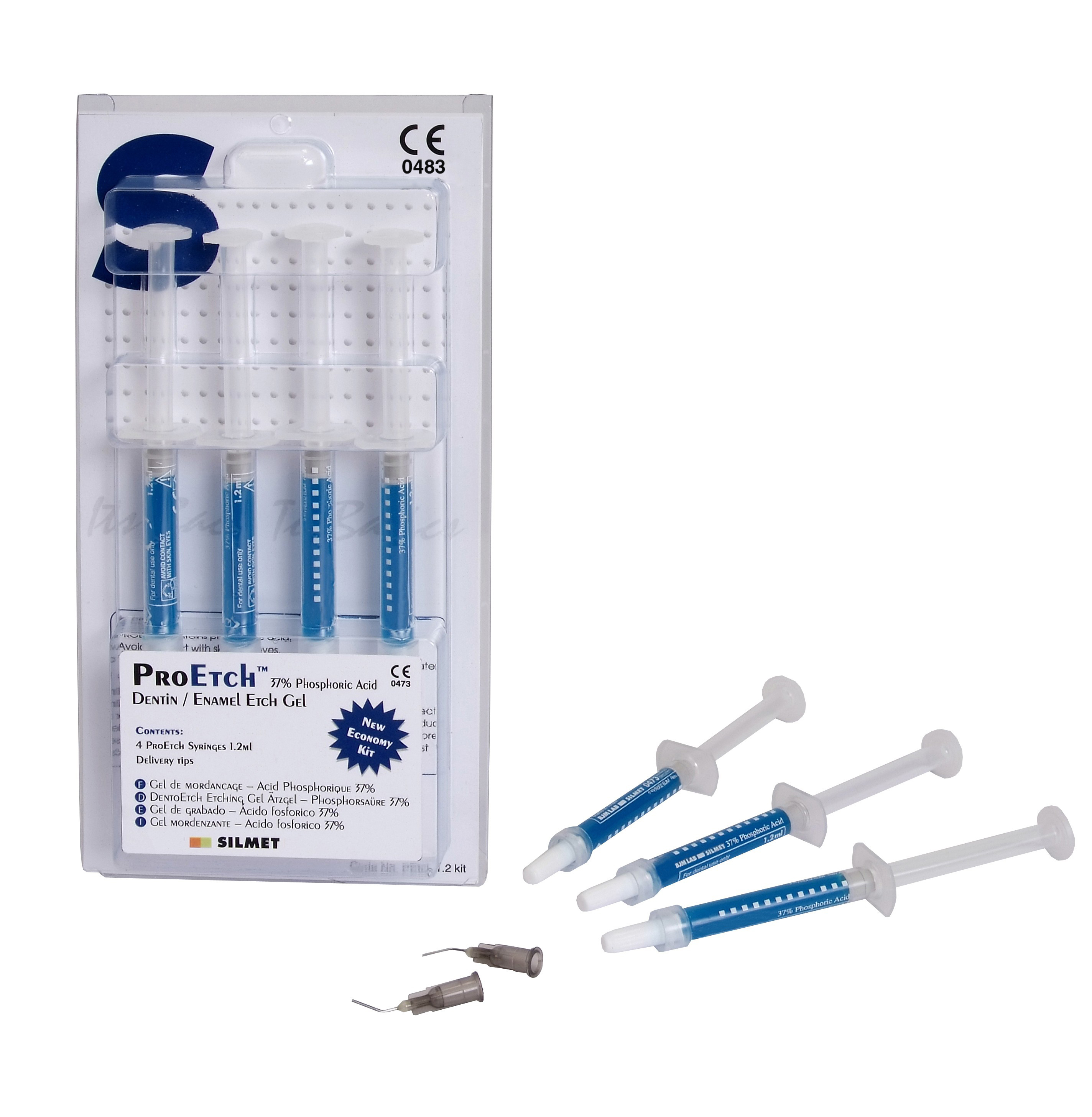
ProFil comes in 4 g syringes (2 g for selected shades), in Unidose capsules of 0.315 g in packs of 20, and in kits, some of which include etch and bond. ProFil Posterior comes in 4 g syringes. Compare these formats against how much composite your practice actually uses.
Specifications help you judge whether a composite meets your needs.
| Specification | What it tells you |
|---|---|
| Depth of cure | The curing depth reported under set test conditions. Also check the recommended increment thickness and curing protocol. |
| Flexural strength | Resistance to bending under a defined test. It's one mechanical property, not a measure of clinical longevity. |
| Water sorption and solubility | How the material takes up water and dissolves under specified test conditions. Check units and test methods before comparing. |
| Radiopacity | Whether the material can be told apart from tooth structure on radiographs, under the relevant test criteria. |
| Polymerization shrinkage | The dimensional change during curing, measured by a particular method. |
| Shelf life and storage | The manufacturer's storage conditions, expiry period and handling requirements. |
Only compare values when the units, test methods and conditions match. If a specification is unclear, ask the manufacturer for the current technical documentation.
| Property | ProFil and ProFil Posterior |
|---|---|
| Sensitivity to ambient light | Homogeneous at 60 seconds |
| Depth of cure | 1.5 mm or more |
| Flexural strength | 80 MPa or more |
| Water sorption | Under 14 μg/mm³ |
| Solubility | Under 7.5 μg/mm³ |
Read these figures alongside the test methods in the instructions for use. For other values, such as radiopacity, shrinkage and shelf life, check the instructions for use and safety data sheets, or contact us.
Silmet's composite range covers different restorative needs. Review ProFil and ProFil Posterior for their indications, shades, formats and technical data.
For documentation, availability or questions about the range, contact the Silmet team.
Yes, if the restoration falls within the material's stated indications and you can meet its placement and curing requirements. Cavity size, occlusal conditions, isolation and proximal contact all affect the choice. A dedicated posterior composite may suit the case better if its handling is a closer match.
You can't tell from the classification alone. Filler characteristics, resin formulation, handling and polishing methods all affect the finished restoration. Look at product-specific data instead.
Start with the recommended increment thickness, exposure time and curing-light requirements. Make sure the light is working properly and held as instructed. Shade, opacity and access to the restoration can all affect how much light reaches the material. If the problem continues, check the product documentation and contact the manufacturer before changing your curing protocol. Silmet's SecuraLight is one LED curing option.
The cost depends on how much you use, how much you throw away, which shades you stock and expiry dates. Compare the cost per usable amount, not the pack price.
Look for the test method, conditions and results behind the claim. A phrase like "high wear resistance" doesn't show that one composite outperforms another. Read laboratory results with their limitations in mind, and add any clinical evidence available.